
HUSH They Can Hear Beginner Guide: Looting and Survival
To survive your first raid in HUSH: They can hear, emerge from the sewer safe zone, crouch to keep noise below alert levels, gather supplies from town buildings, and reach a marked exit before the boarding doors shut.
To survive your first raid in HUSH: They can hear, emerge from the sewer safe zone, crouch to keep noise below alert levels, gather supplies from town buildings, and reach a marked exit before the boarding doors shut.
Core Raid Loop and Noise Management
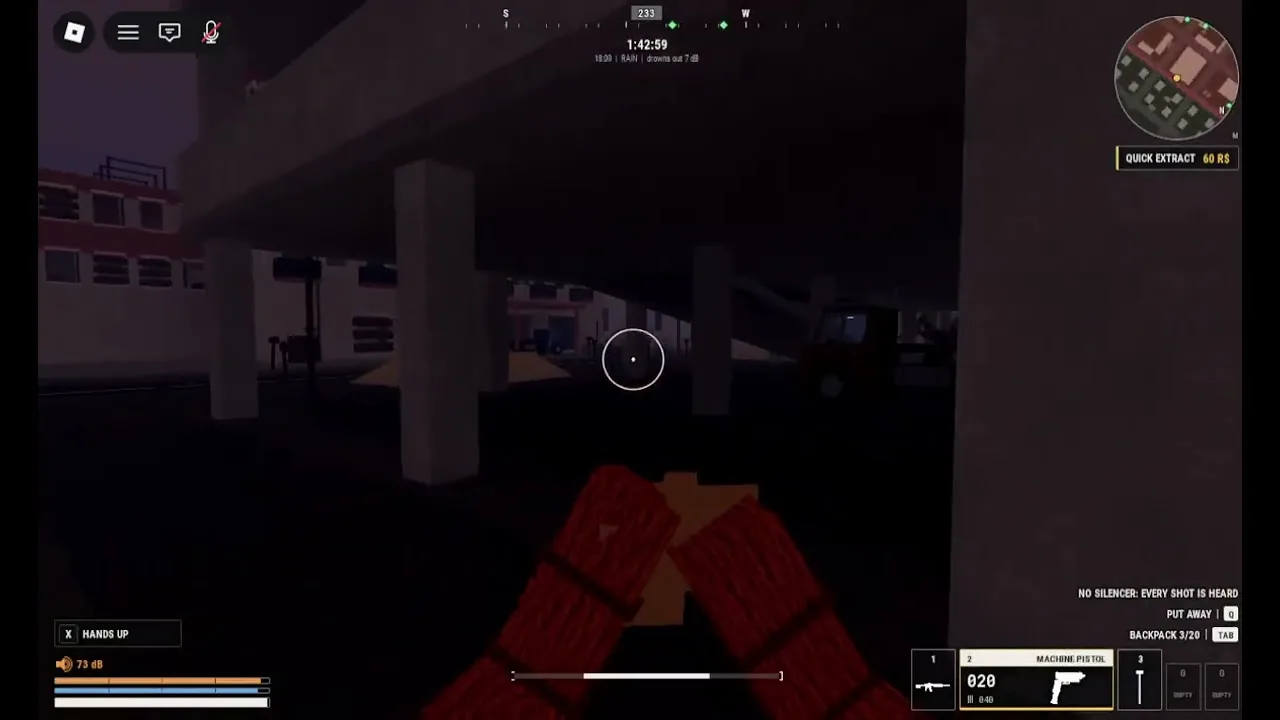
Every run starts from the sewer safe zone and sends you into the monster-occupied town to scavenge supplies. The monsters in town hunt purely by audio, turning sound mechanics into the primary survival system. The bottom-left HUD displays a loudness meter that measures output in decibels alongside environmental modifiers. Indoors, ambient noise drops by 8 dB, and heavy fog dampens output by 1 dB.
Standard walking outside registers around 52 dB, which easily draws nearby creatures. Using crouch lowers that output to roughly 33 dB, allowing safe movement through hallways and alleys. Firing unsuppressed weapons spikes sound across entire city blocks, alerting standard monsters and heavier threats. Doors also generate sound when opened, so closing them after entering a room breaks direct pursuit lines and keeps interior noise contained.
High-Value Town Locations and Container Looting
The in-game map marks key structures across town with color-coded markers. Red icons identify best loot zones, while yellow icons mark better loot areas. Old Town contains dense collections of weapon crates and electronics, though monster density is high. Peripheral locations like Kessler Works, the hospital, and the army camp offer alternative supply runs.
Inside buildings, supplies rest inside specific containers:
- Red toolboxes open by pressing E to yield crafting materials and tools, though some generate empty.
- Crash carts provide multi-item medical supplies and allow a fast grab using the R key for Take All.
- Dressers and ammo crates hold loose ammunition, cloth rags, and grenades.
- Vaults and desks contain office keys, electronics, and rare bunker codes.
The default backpack contains 20 storage slots, each displaying the credit worth of the stored item. Because every dropped item is lost upon death, picking an escape route once your bag fills protects accumulated value.
Movement Options for Raids
Choosing how to travel through town balances physical speed against monster awareness.
| Movement Choice | Best Tactical Situation | Operating Trade-off |
|---|---|---|
| Crouch walk | Exploring close to blind monsters | Reduces movement speed significantly |
| Rooftop parkour | Bypassing crowded ground-level streets | Limits looting to roof pathways and accessible second floors |
| Driving vehicles | Covering long distances across the outer map | Registers high sound levels around 81 dB that alert pursuers |
Players who decide to hotwire cars gain speed to reach distant gates, but engines produce roughly 81 dB. If you choose to drive, fastening your seatbelt with B keeps you from being thrown through the windshield during collisions.
Securing Valuables and Reaching Exits
Dying inside town wipes all carried weapons, tools, and backpack items. Only items stored inside your safe pocket return to base after death. Place high-value items, such as bunker codes, gold items, or rare keys, directly into the safe pocket immediately upon pickup.
To complete a raid, check the map for green Way Out markers. Standard town escape points include Old Town Metro, North Gate, Helipad, and the Rail Tunnel. Roadside extraction posts require you to trigger the call and wait near the vehicle. A red warning lamp marks the boarding window, and stepping inside before the doors shut triggers the completed run screen and awards a skill point. Planning your extraction before monster hordes converge prevents sudden wipes at the exit boundary.
Selling Gear and Early Progression
Escaping returns your haul to base storage, where items convert into credits at the HUSH Supply vendor. The shop interface features dedicated buttons to sell individual items, sell the full inventory, or clear all junk items at once.
Sale values vary by item type:
- Bunker Code: 150 credits
- Medkit: 60 credits
- Bandage: 15 credits
- Energy Bar: 15 credits
- Chemicals: 14 credits
- Cloth Rags: 2 credits each
- Light Ammo: 1 credit each
Accumulated credits purchase upgraded weapons, medical items, and expanded rigs from the vendor. Reinvesting early earnings into bandages, energy food, and suppressed sidearms makes subsequent town runs quieter and significantly more profitable.